Legal Intake Mistakes That Cost Law Firms Thousands (And How to Fix Them)

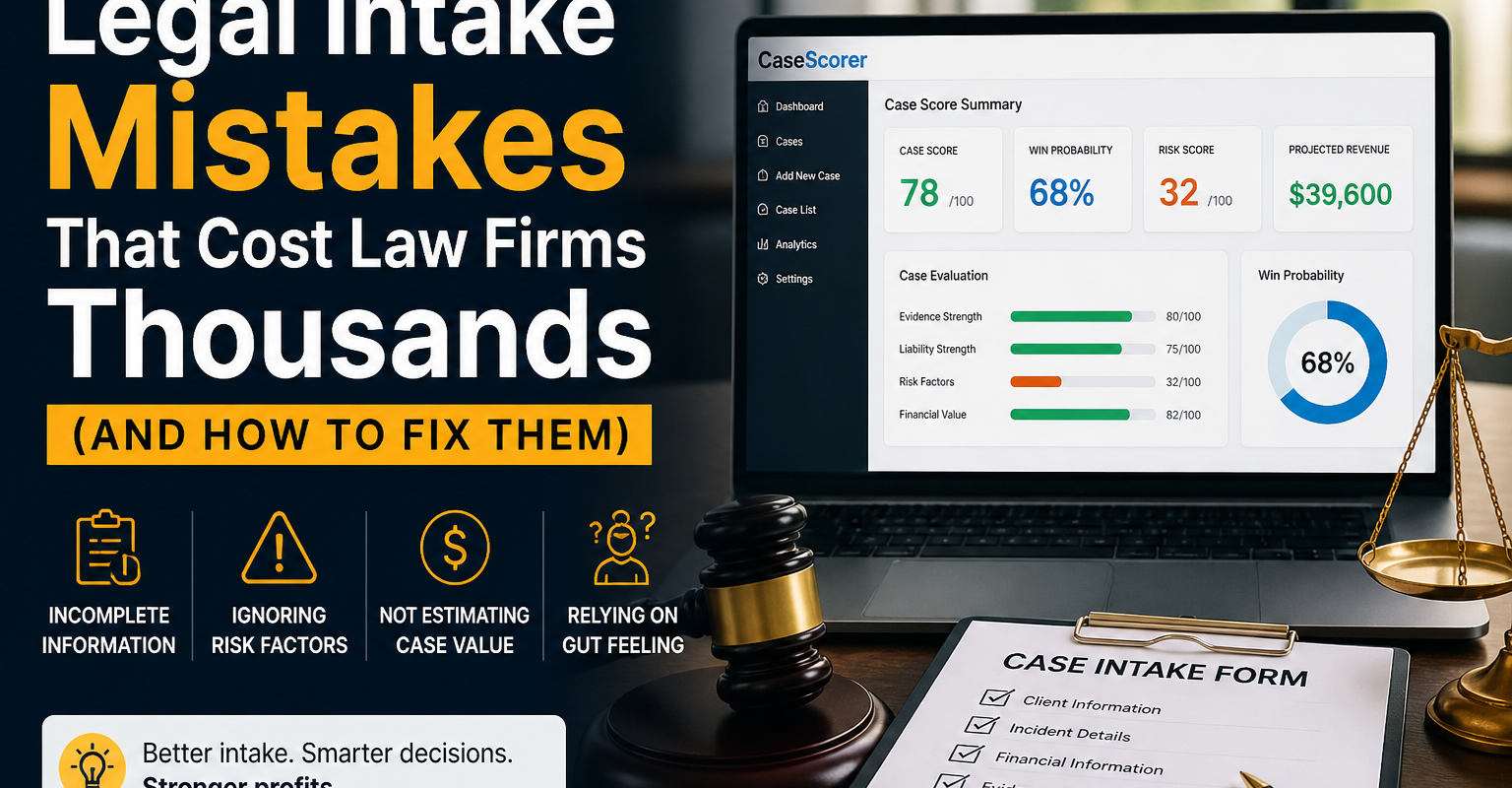
Most law firms don’t realize it, but the biggest revenue leak isn’t in the courtroom—it’s at intake.
The first conversation with a potential client decides everything.
Yet in many firms, intake is rushed, inconsistent, and based on incomplete information.
The result? Bad cases get accepted. Good ones slip through.
Mistake #1: Relying on Gut Feeling Instead of Legal Intake Data
Many lawyers trust experience—and that’s important. But when decisions are made only on instinct, things get inconsistent.
One team member might accept a case another would reject. There’s no standard.
Fix:
Create a structured evaluation process where every case is judged on the same factors—evidence, risk, and financial value.
Mistake #2: Incomplete Case Information
Most intake calls collect basic details:
- Name
- Incident type
- Contact info
But miss critical data like:
- Insurance coverage
- Strength of evidence
- Liability clarity
Without this, you’re deciding blindly.
Fix: Use a structured intake format that captures all key data points before making a decision.
Mistake #3: Ignoring Risk Factors
A case might look valuable on the surface, but hidden risks can destroy its potential.
Common risks include:
- Shared fault
- Weak documentation
- Legal deadlines
- Pre-existing injuries
Many firms don’t properly weigh these risks early.
Fix:
Assign a risk score to each case so you can clearly see potential downsides before committing.
Mistake #4: Not Estimating Case Value Early
Firms often move forward without knowing:
- Possible settlement range
- Expected legal fees
- Actual ROI
This leads to wasted time on cases that don’t pay.
Fix:
Estimate revenue at intake stage using a simple formula:
Claim Value × Win Probability × Fee %
This gives a rough but powerful financial picture upfront.
Mistake #5: Treating All Leads the Same
Not every lead deserves equal attention.
Some are high-value, high-probability cases.
Others are low-value or risky.
But without a system, everything gets treated equally.
Fix:
Prioritize cases based on score and potential return. Focus your best resources on the best opportunities.
Mistake #6: No Clear Accept/Reject Criteria
Many firms don’t have defined rules for:
- What score is acceptable
- What risk level is too high
- What minimum case value is required
So decisions vary day to day.
Fix:
Set clear thresholds. For example:
- Accept: Score above 70
- Review: 50–70
- Reject: Below 50
This creates consistency across your team.
Mistake #7: No Feedback Loop
Once a case is accepted or rejected, most firms don’t analyze whether the decision was right.
That means no learning, no improvement.
Fix:
Track outcomes and compare them with initial evaluation. Over time, your decision-making becomes sharper and more accurate.
Why This Matters More in 2026
Legal marketing is getting more competitive.
- Lead costs are rising
- Clients are more selective
- Time is limited
You can’t afford to waste resources on the wrong cases anymore.
Firms that fix their intake process gain a massive advantage.
A Better Way to Handle Intake
Instead of scattered notes and guesswork, modern firms use a structured system that:
- Captures complete case data
- Calculates scores automatically
- Highlights risks instantly
- Estimates revenue before commitment
This is exactly how platforms like CaseScorer are designed—to turn intake into a decision-making engine, not just a form.
Final Thoughts
Improving intake isn’t complicated—but it requires discipline.
The firms that win are not the ones taking the most cases.
They are the ones taking the right cases.
Fix your intake process, and you fix your profitability.