Case Scoring for Personal Injury Lawyers: Stop Guessing, Start Predicting

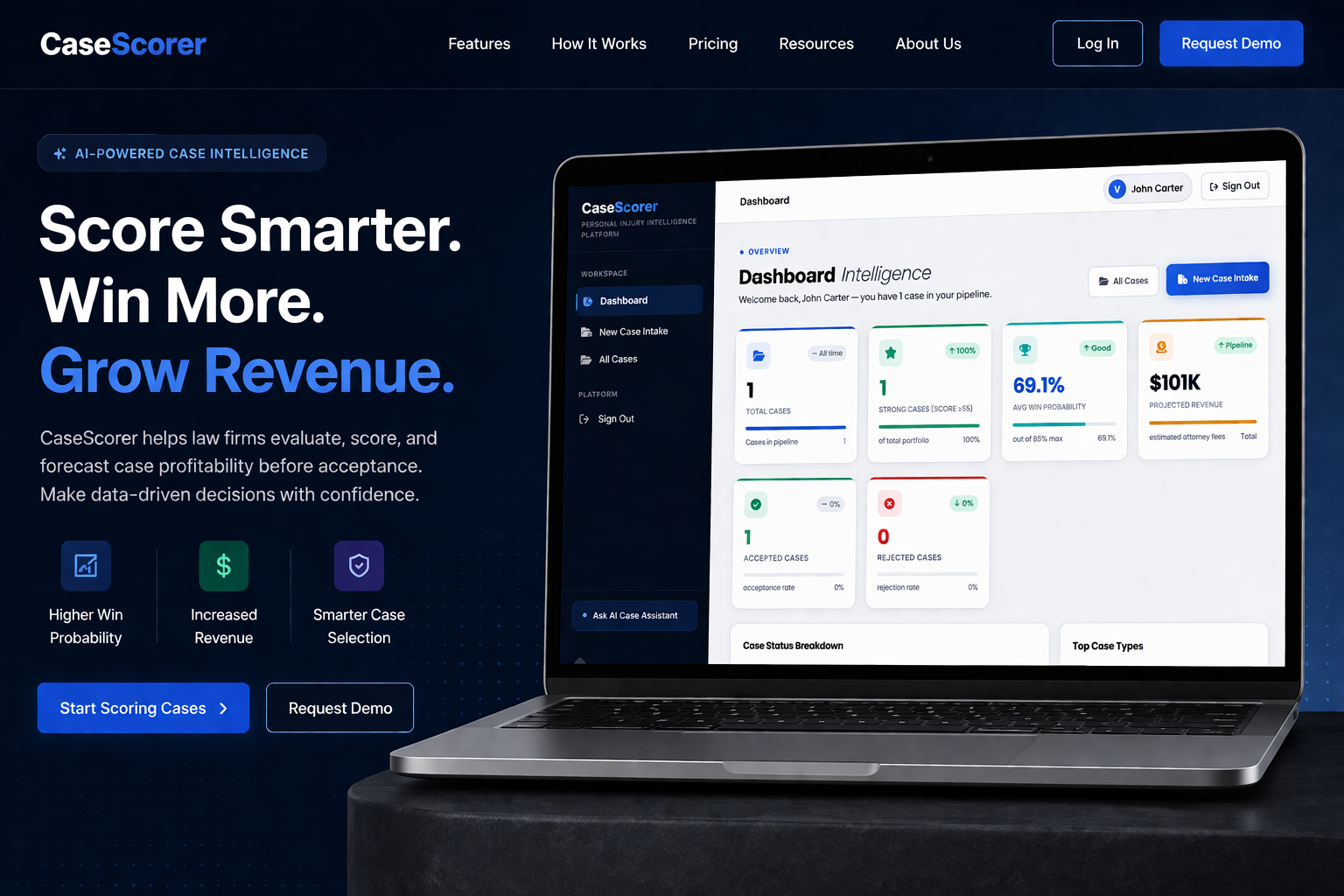
Most law firms don’t lose money because of a lack of leads. They lose money because they accept the wrong cases.
A case might look promising at intake—but months later, it drains time, resources, and delivers little to no return.
That’s where case scoring changes everything.
What is Case Scoring?
Case scoring is a structured way to evaluate a legal case before you accept it.
Instead of relying on gut feeling, you use real inputs like:
- Evidence strength
- Risk factors
- Estimated damages
- Liability clarity
- Legal fees
The result is a clear, data-backed decision.
Why Most Law Firms Struggle with Case Selection
Most firms operate without a structured evaluation system.
- Intake teams focus on volume, not quality
- Partners rely on experience instead of data
- Marketing teams can’t measure lead quality
This leads to:
- Low-profit cases filling your pipeline
- Wasted legal hours
- Poor ROI on marketing spend
Without a system, every decision becomes reactive.
How Case Scoring Works
A proper case scoring system breaks every case into measurable components.
1. Evidence Strength
Includes:
- Witnesses
- Police reports
- Medical documentation
- Admission of fault
The stronger the evidence, the higher the chance of winning.
2. Risk Analysis
Risk factors reduce case strength:
- Comparative negligence
- Pre-existing injuries
- Weak documentation
- Legal deadline risks
3. Win Probability
Win probability is calculated based on:
Evidence strength – risk score + liability strength
This gives a realistic estimate of success.
4. Revenue Projection
This is where decision-making becomes practical.
Projected Revenue = Estimated Settlement × Lawyer Fee %
Example:
- Settlement: $120,000
- Fee: 33%
- Revenue: $39,600
Now you know what the case is actually worth before accepting it.
5. Final Case Score
A combined score (0–100) based on:
- Evidence strength
- Win probability
- Financial value
- Risk adjustment
This becomes your decision-making number.
What Happens When You Use Case Scoring
Better Case Selection
You stop accepting weak or risky cases.
Higher Profit Per Case
You prioritize high-value, high-probability cases.
Faster Decision Making
No more back-and-forth or guesswork.
Smarter Marketing
You understand which leads actually convert into revenue.
Real Use Cases in Personal Injury Law
Case scoring works across:
- Car accident cases
- Slip and fall claims
- Medical malpractice
- Wrongful death
The Shift: From Intake to Intelligence
Traditional process:
Lead → Call → Guess → Accept
Modern process:
Lead → Structured Data → Score → Predict → Decide
Final Thought
You don’t need more cases. You need better cases.
Case scoring gives you control over your pipeline, your revenue, and your time.
Instead of asking, “Should we take this case?”
Start asking, “Is this case worth it?”
That’s where real growth begins.